38 do nutritional labels list only healthy nutrients
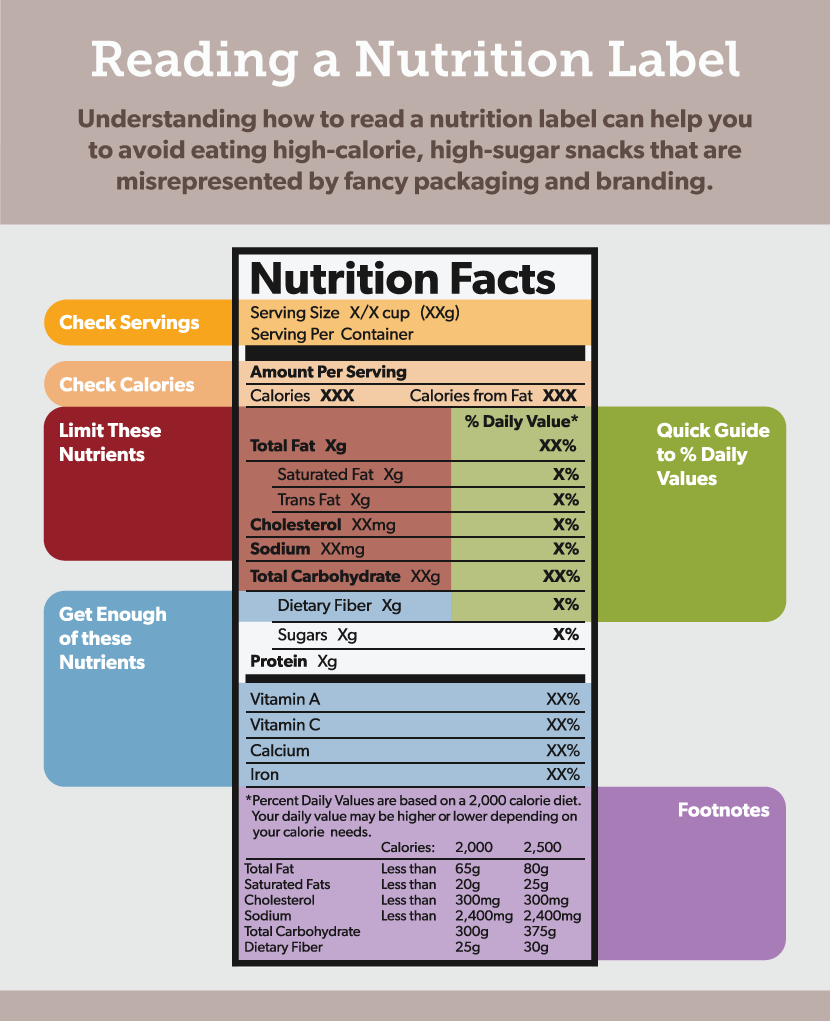
Food Labels | CDC If you eat the whole thing, you are eating 8 times the amount of calories, carbs, fat, etc., shown on the label. Total Carbohydrate shows you types of carbs in the food, including sugar and fiber. Choose foods with more fiber, vitamins, and minerals. Choose foods with lower calories, saturated fat, sodium, and added sugars. Avoid trans fat. Nutrition Label Glossary: Definitions of Nutrition Fact Terms This number on a food label indicates how much fat is in a single serving of a food. Limit total fat to less than 25% to 35% percent of the calories you consume each day. All fats have 9 calories ...
10 Things To Know About Nutrition Labels | wellwvu | West Virginia ... Ingredient List: Beneath the Nutrition Facts, every food label has an ingredient list, which shows all the ingredients in the item listed from greatest amount to smallest amount. For example, here's what's in the cheese pizza: This pizza contains mostly cheese and flour, so it's likely to be in calories, fat and carbohydrates.

Do nutritional labels list only healthy nutrients
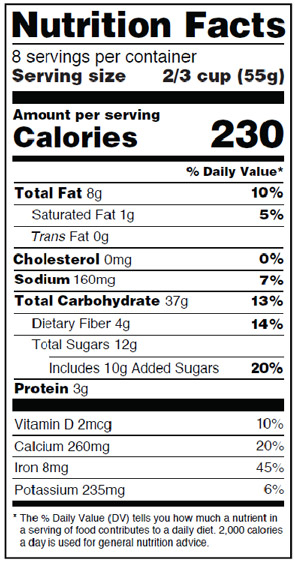
Learn How the Nutrition Facts Label Can Help You Improve Your Health Nutrients Required on Label Vitamin D and potassium values are required. Calcium and iron will continue to be required. Vitamins A and C will no longer be required but can be included on a voluntary basis. Slight Decrease in Sodium Allowance The daily limit for sodium decreased slightly from 2,400 mg per day to 2,300 mg per day. How to Read a Nutrition Facts Label | Everyday Health New nutrients Labels are now required to show vitamin D and potassium content (vitamins A and C are no longer required, likely because they are no longer considered "nutrients of concern," says... Food Labeling & Nutrition | FDA Food labeling is required for most prepared foods, such as breads, cereals, canned and frozen foods, snacks, desserts, drinks, etc. Nutrition labeling for raw produce (fruits and vegetables) and...
Do nutritional labels list only healthy nutrients. How To Read Food and Beverage Labels - National Institute on Aging Additionally, many older adults do not get the recommended amounts of dietary fiber, vitamin D, calcium, and potassium. Eating enough foods that contain these nutrients can reduce the risk of developing some diseases and conditions, such as cardiovascular disease, osteoporosis, and high blood pressure. Dietitians Explain What Food Labels Reveal about Nutrition High-fat milk. Cheese. Ice cream. Sour cream. Tropical oils like coconut, palm, and cocoa butter. Fried foods-French fries, fried meats, and other fried foods. Snack foods like potato chips, microwave popcorn, and crackers. Eating a high amount of saturated and trans fats will increase your cholesterol levels. Understanding Ingredients on Food Labels - American Heart Association Understanding Ingredients on Food Labels. Food labels are an important source of information about calories and the nutritional value of the foods you eat, a crucial tool in building a heart-healthy diet. The Nutrition Facts information is always displayed in the same orderly fashion and helps you understand how much of certain nutrients that ... Understanding Food Labels and Health Claims - Nutrition ... - Maricopa This label is called a Nutrition Facts panel, which gives information on the number of servings per container, the number of calories per serving, and certain nutrients. Specifically, it lists the macronutrients and four of the most important micronutrients people need to pay special attention to, such as Vitamin D, Calcium, Iron, and potassium.
Nutrition Labels 101: What's Required? What's Optional? Total carbohydrates is a required listing unless there is less than 1 gram, at which point it can be expressed as "contains less than 1 gram," or if less than 0.5 grams per serving, it can be expressed as zero. Sugars are the sneaky nutrient found naturally in many "healthy" foods, including fruit and milk. How to Read Food Labels Without Being Tricked - Healthline The product may contain very little whole grains. Check the ingredients list — if whole grains aren't in the first three ingredients, the amount is negligible. Fortified or enriched. This ... Food Labels & Nutrition Facts - Ask the Dietitian® Food Labels & Nutrition Facts. You have been so kind to take the time to answer my questions. Thank you so very much. Please permit me a couple of follow-up questions. The US Dietary Guidelines recommend moderate intake of sugar which includes sugar you add to food at the table as well as sugar added by food manufacturers. 7 Things You Should Always Check On A Nutrition Label—Other Than ... 1. Serving Size. Even if you're super diligent about checking your labels for calories, you need to make sure you're always looking at the serving size on the package, too, says Natalie Rizzo, M.S. R.D., founder of Nutrition à la Natalie.. For example—that granola you add to your Greek yogurt. Say the serving size is a third-cup at 120 calories.
Understanding Food Labels | The Nutrition Source | Harvard T.H. Chan ... Under the Food Allergen Labeling and Consumer Protection Act of 2004, eight major food allergens—milk, fish, tree nuts, peanuts, shellfish, wheat, eggs, and soybeans—are required to be listed in a "contains" statement near the Ingredients list if present in a food. An example would be "contains wheat, milk, and soy." Understanding Food Nutrition Labels - American Heart Association Make sure you get enough of the nutrients your body needs, such as: calcium, choline, dietary fiber, iron, magnesium, potassium, and vitamins A, C, D and E.* 5 - Understand % Daily Value. The % Daily Value (DV) tells you the percentage of each nutrient in a single serving, in terms of the daily recommended amount. How to Understand and Use the Nutrition Facts Label | FDA Dietary fiber, vitamin D, calcium, iron ad potassium are nutrients on the label that Americans generally do not get the recommended amount of. They are identified as nutrients to get more of.... Food Labels | Nutrition.gov Food Labels Food labels can help you make healthy choices when buying food in grocery stores or restaurants. Labeling Organic Products USDA, Agricultural Marketing Service, National Organic Program Learn about organic foods, requirements, and how they are labeled. Calories on the Menu HHS, Food and Drug Administration
Nutrition label, what's changed?
How to Read Nutrition Facts Label | Food Network Healthy Eats: Recipes ... This carries over to all the other nutrients on the label. If 1 serving of a food has 120 mg of sodium, it can technically be labeled as a "low sodium" food. However, if you eat 3 servings, triple...

Nutritional Labels on Pinterest | 44 Pins
How to Understand the Nutrition Facts Label - HealthyBeat Looking at the serving size is important because the nutrition facts listed will apply to this portion. For example, if the label lists "200 calories," this means that there will be 200 calories per serving. If the serving size is 1 cup and you eat 2 cups, you consumed 400 calories. Therefore, it is important to compare the serving size to ...

South Haven Tribune - Schools, Education3.18.19South Haven History Club members qualify for ...
Nutrition: How to Read a Nutrition Facts Label - familydoctor.org Men 50 years of age or younger should get at least 38 grams of fiber per day. Women 50 years of age or younger should get at least 25 grams of fiber per day. Fiber is found in fruits, vegetables, and whole grains. Look for the words "whole grain" on the package and ingredient list. Vitamins and minerals.

Energy (Macro) Nutrients: Protein, Fat, and Carbohydrates | Personal Health and Wellness ...
My Food Product: Do I Need Nutrition Facts On My Labels? If any exemptions are met, your food still has to include nutrition facts if the label has any nutrient claims. Small businesses (your own or any that sell your product) that have more than $50,000 of food sales AND more than $500,000 of total sales. So, if you want to be in any major grocery chain, you'll need nutrition fact labels.

32 Stevia In The Raw Nutrition Label - Labels Information List
How to Decode a Nutrition Label - Healthline realizing that the nutrient values on labels are listed per serving size — and keeping track of how many servings you're eating understanding that labels don't list all nutrients important for good...
How to understand nutrition labels - Business Insider
Food Labels 101: Understanding the Nutrition Facts Label For a heart healthy diet, you should always try to keep your sodium intake to about 2300 mg per day. A sodium level of 140 mg or less on the nutrition facts label is considered low sodium. This is an essential number to look for when reading the label. Total Carbohydrates - Fiber and Sugar
Nutrients | Free Full-Text | Effect of Educational Interventions on Understanding and Use of ...
7 Things to Look for on a Nutrition Label (Other Than Calories) Carbohydrates and Fiber. Once you've looked at the protein and fat, the last macronutrient to consider is carbohydrates. The nutrition facts will give you the total grams of carbs as well as how many are coming from fiber and sugar. "I'm much less concerned about total carbs than with fiber and sugar," says Dorfman.

South Haven Tribune - Schools, Education 6.26.17Bangor Schools lands $124,000 grant to buy ...
Food Labels: Fat & Cholesterol | Home & Garden Information Center Limit these sources of unhealthy fat and cholesterol in the list of ingredients: animal fat (beef, ham, pork, bacon, lamb, chicken, turkey), lard, hardened fat or oil, egg and egg-yolk solids, cream, butter, whole-milk solids, palm oil, palm kernel oil, hydrogenated vegetable oil, vegetable shortening, coconut, coconut oil, and cocoa butter.

Eat Live Grow Paleo : Hippocrates Slow Cooker Soup
Food Labeling 101: Understanding the Nutrition Facts Label Ingredients are listed in order of amount by weight, starting with the largest amounts. This can be the most important information if there are ingredients you're avoiding for one reason or...

South Haven Tribune - Schools, Education 3.27.17 SH orchestras earn high ratings at district ...
Food Labeling & Nutrition | FDA Food labeling is required for most prepared foods, such as breads, cereals, canned and frozen foods, snacks, desserts, drinks, etc. Nutrition labeling for raw produce (fruits and vegetables) and...

Morgellons Disease Awareness - Morgellons Disease diet tips to alkaline the body plus biofilm ...
How to Read a Nutrition Facts Label | Everyday Health New nutrients Labels are now required to show vitamin D and potassium content (vitamins A and C are no longer required, likely because they are no longer considered "nutrients of concern," says...

Do you want to grow corn microgreens? These delicious sweet-like popcorn microgreens are a ...
Learn How the Nutrition Facts Label Can Help You Improve Your Health Nutrients Required on Label Vitamin D and potassium values are required. Calcium and iron will continue to be required. Vitamins A and C will no longer be required but can be included on a voluntary basis. Slight Decrease in Sodium Allowance The daily limit for sodium decreased slightly from 2,400 mg per day to 2,300 mg per day.

South Haven Tribune - Schools, Education8.20.18New school year begins Sept. 4 for area ...

Our Foods – Feel Better Foods

Understanding Nutrition Labels and Nutrition Facts

How to Read Food Labels - Healthy Living
Foods That Seem Healthy But Are Not | Fix.com

2.6: Understanding Food Labels - Medicine LibreTexts
Post a Comment for "38 do nutritional labels list only healthy nutrients"